Every turn has an ending
Choose a destination
Find the clear space you need to reach. Starting a turn without that target leaves you deciding its size while the ball is already moving.
Watch the clearance
Keep the input only while it helps you reach the opening. Compare the ball’s line with the road edges so the movement leaves room after the obstacle.
Read the result
Release once you have the clearance you need, then watch where the ball goes. Add another input only when its line needs a specific correction.
Size the movement to the available surface
The same familiar key hold can feel manageable on a broad road and excessive on a narrow landing. That does not give you a reliable universal sensitivity number. It tells you to judge the movement in relation to the space you have.
Start with the smallest input that reasonably reaches your target. If more movement is needed, there is still a decision to make. A large initial swing can consume that option before you have seen whether it worked. This is especially relevant after clearing a block: the empty side of the obstacle may be close to an open edge.
| Observed result | Question to ask | Useful adjustment |
|---|---|---|
| You move before you have picked a side | Did I choose an opening first? | Make the destination clear before beginning the input |
| You clear the block but leave the road | Was the direction still held after clearance? | Try an earlier release on the next comparable approach |
| You swing repeatedly across the course | Is each correction larger than necessary? | Wait for a visible reason before reversing direction |
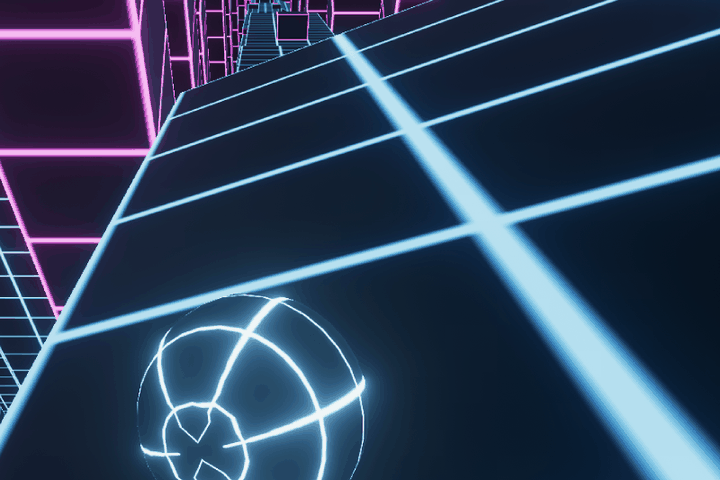
A recovery is not a mirrored mistake
After too much right input, a long left hold can feel like the obvious answer. It can also create the same problem on the opposite side. Identify the minimum position change you need now, rather than trying to cancel the previous press with an equally dramatic one.
Keep your attention on a usable patch of track. Watching only the ball makes the whole screen feel as if it needs correcting. A stable visual destination gives the next input a reason to end.
Some mistakes leave too little surface for a reliable recovery. Use those runs to study the earlier input that used up the margin. Do not build a strategy around saving every impossible-looking edge position.