
What carries over between the games
In Slope 2 and Slope 3, forward motion leaves you to manage sideways position. For a narrow opening, judge how much sideways movement will clear it. For a gap between platforms, set a line that points at the landing.
A familiar control pair helps you start, but it does not tell you how long to hold a key. Make a brief correction on a wide stretch, then release. If the ball travels farther sideways than expected, reduce the next input before attempting a narrow section.
Start with Slope 2 if that is the course you already know and you want to refine a familiar run. Try Slope 3 for a different neon presentation while keeping the same basic steering task. Neither title alone tells you which game you will find easier.
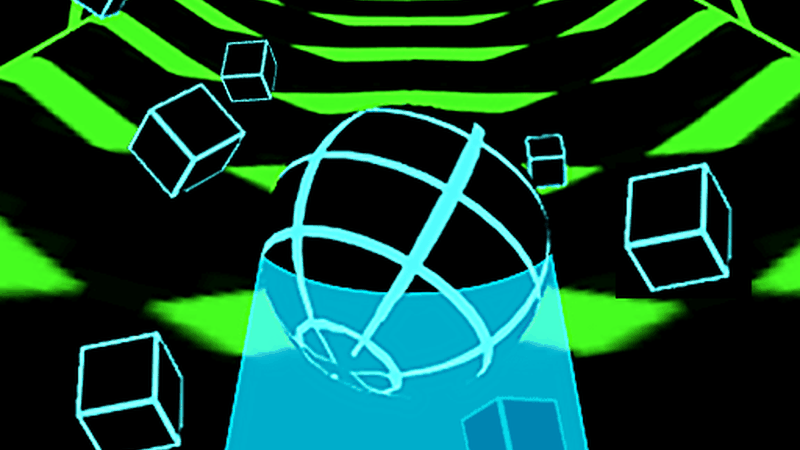
| Question | Slope 2 | Slope 3 |
|---|---|---|
| How do you move? | Steer left and right while the ball moves forward | Steer left and right while the ball moves forward |
| What do you aim for? | Clear the next obstacle and stay on the track | Clear the next obstacle and stay on the track |
| What should you learn first? | How far a short correction carries the ball | How far a short correction carries the ball |
| How should you judge progress? | Beat your own Slope 2 attempts | Beat your own Slope 3 attempts |
Find out why an attempt ended
After a collision, check whether you noticed the obstacle late or held the correction too long. After a fall, check whether you crossed an edge during the dodge or missed the far platform. Each failure gives you a more useful next goal than simply trying to react faster.
If the first attempts are short, decide whether the problem is an unfamiliar response or a new visual reference. A ball that moves farther than you expected suggests recalibrating the input. A platform that you notice too late suggests changing where you look. They call for different adjustments.
Give each game its own personal benchmark. A larger score in one is not evidence that it is easier or that the same score should be reachable in the other. The useful comparison is which kind of decision you enjoy working on.