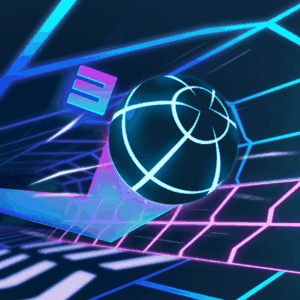
A shared steering problem
In classic Slope and Slope 3, forward travel is automatic and left-right steering determines the line across the track. A dangerous collision or a fall can end an attempt. Neither game has a separate manual jump or brake key.
In both games, a dodge has to leave room for what follows. Before moving around a block, check the road beyond it. Before a gap, line up with the far platform. Use the first few turns to judge how much steering input you need.
| Part of play | Classic Slope | Slope 3 |
|---|---|---|
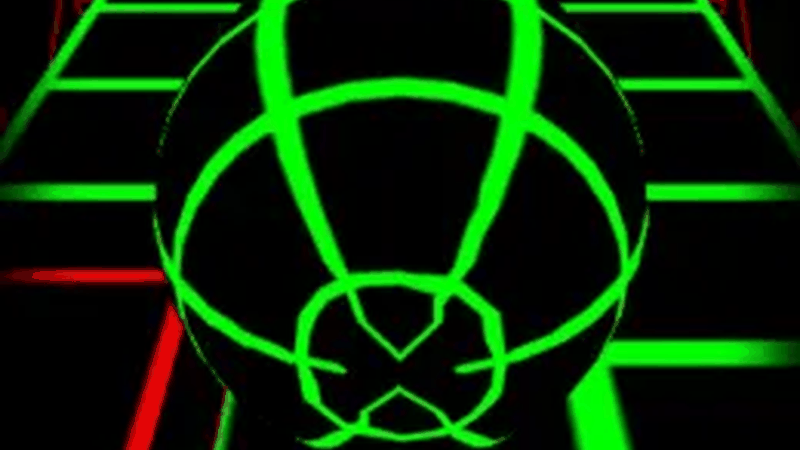
| Visual identity | Green wireframe road and ball presentation | Cyan neon road and ball with a bright surrounding scene |
| Main input | Left/right arrows or A/D | Left/right arrows or A/D |
| Travel | Automatic forward movement | Automatic forward movement |
| Jump and brake | No separate manual jump or brake | No separate manual jump or brake |
| Look ahead for | Obstacle clearance and the next platform | Obstacle clearance and the next platform |
Classic Slope
The pared-back green presentation gives the ball and road a clear common visual language. Watch which objects are on your usable route and how much room remains after a turn.

Slope 3
The cyan scene adds strong background shapes around the road. Keep the next platform’s actual edges as your reference rather than following a decorative skyline line.
Carry over a habit, then recalibrate
Find a clear line, steer toward it, then release before the move carries you too close to the opposite edge. If a familiar key hold sends the ball farther than expected, shorten the next correction.
The same applies to gaps. Read where the far surface is, not merely the edge you are leaving. An automatic launch does not remove the need for an approach line, and a good line in one section is not a universal route for another game.
If a change of game feels difficult, keep the player size and key pair comfortable while you settle in. Switching every part of the setup at the same time makes the difference harder to understand.