Choose the action the obstacle needs
| Action | Input | What to read first |
|---|---|---|
| Change lane | Left / Right Arrow | The usable lane beyond the approaching obstacle |
| Jump | Up Arrow | The obstruction and clear space where the runner will arrive |
| Roll | Down Arrow | The opening beneath a suitable barrier |
| Use an available hoverboard | Space | Your inventory and the situation ahead |
Subway Surfers moves the runner forward automatically along a three-lane railway route. You choose when to move sideways, jump or roll. That menu of actions makes an obstacle a choice about both position and movement, rather than just steering around its edge.
Read beyond the first train or barrier. The lane that is clear now may need another action immediately afterward. Keep the next landing or rolling exit in the same plan so that one successful move does not lead straight into another problem.
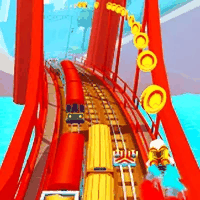
Subway Surfers in San Francisco
This player opens the San Francisco edition of Subway Surfers. Check its own menus for available characters, boards and upgrades as you collect coins.
Coins support unlocks and upgrades inside the game. Hoverboards offer a different kind of option: when one is available and active, it can absorb a collision. Availability is still a resource decision, so route reading remains useful even when you have a board.
A head-on crash can end the run, while a light touch may cause a stumble. Repeated bumps let the guard catch you, so find a clear lane after a mistake instead of rushing straight into another one.
Treat coins as a second question
First choose a route through the trains and barriers. Then decide whether the coin line fits that route. A pickup that demands a rushed change of lane can cost more of the attempt than it adds.
Keep the exit in view
A jump has a landing and a roll has an end. The next object matters before the current action is over. Use that follow-through to judge whether the chosen lane remains useful.
Switch from lane choices to continuous steering
If you return to Slope 3, reset the habit of treating left and right as discrete lane changes. The ball moves across the width of its platform, and there is no manual jump or roll. A familiar direction key therefore asks for a different kind of movement.
The full comparison explains that distinction without comparing unrelated score numbers. For another runner with a real jump and a very different surface choice, try Run 3.
Before your next run
Which Subway Surfers version is in this player?
This player opens Subway Surfers: San Francisco. Use its own menus to see the characters, hoverboards and upgrades available in this edition.
How do I activate a hoverboard?
Space activates an available hoverboard in the selected desktop control scheme. An active board can protect against a collision, but it depends on having one available; do not treat it as an unlimited rescue button.
Does every bump end a Subway Surfers run?
No. A light touch can cause a stumble without ending the run, but repeated bumps let the guard catch you. A direct crash is more serious; aim for a clear lane after the first mistake.
Can I follow a coin line through every obstacle?
Read the track first. A coin trail can require a lane change, jump or roll at an awkward time. Decide whether the complete route is safe before following the next pickup.
More Similar Games
Three different ways to test the same quick reactions.